Cascaid Tool
Helping Families Navigate Genetic Cancer Risk
- UX/UI
- UX Strategy
- Bilingual
- Tailored Flows
About the Tool
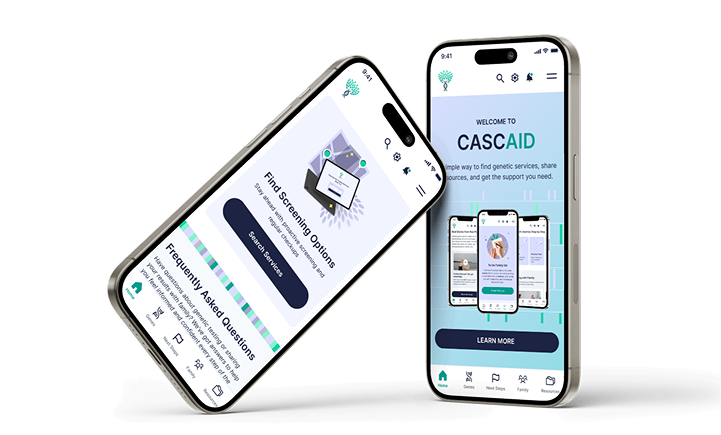
Cascaid is a digital support platform created in collaboration with the Yale Cancer Center to help patients and at-risk relatives better understand genetic testing, navigate next steps, and communicate with their families more confidently.
THE
Problem
Genetic testing can be life-saving, but what happens after someone receives a positive result like a BRCA2 mutation? Many patients — and their families — are left confused, scared, and without clear guidance.
Here’s what we discovered:
- Patients with positive test results often don’t know where to go next.
- At-risk relatives may want to get tested, but don’t know how or where to start.
- Most existing resources are fragmented, overly clinical, and not emotionally supportive.
- Users don’t want to create accounts or download apps to access urgent, sensitive information.
THE
Solution
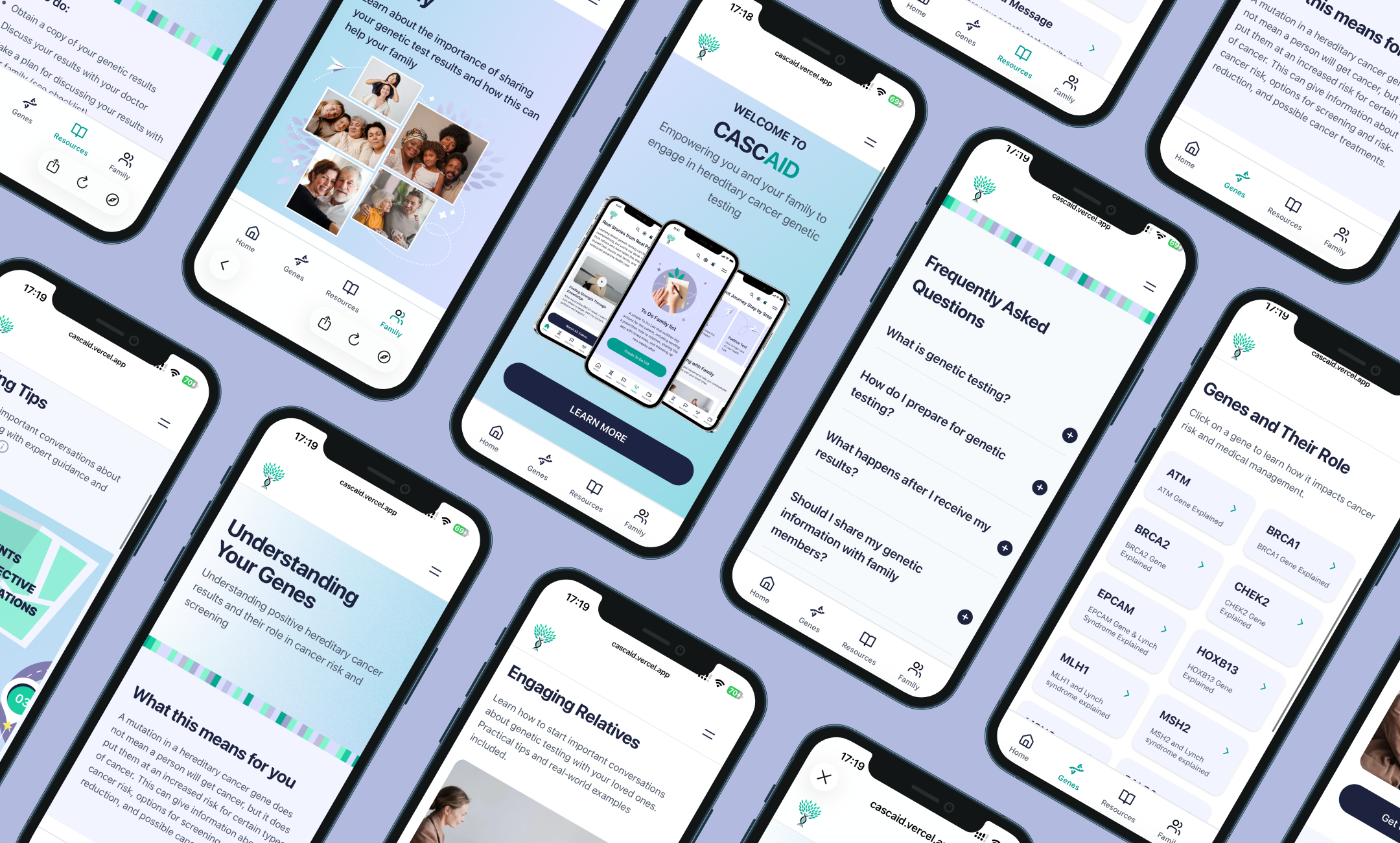
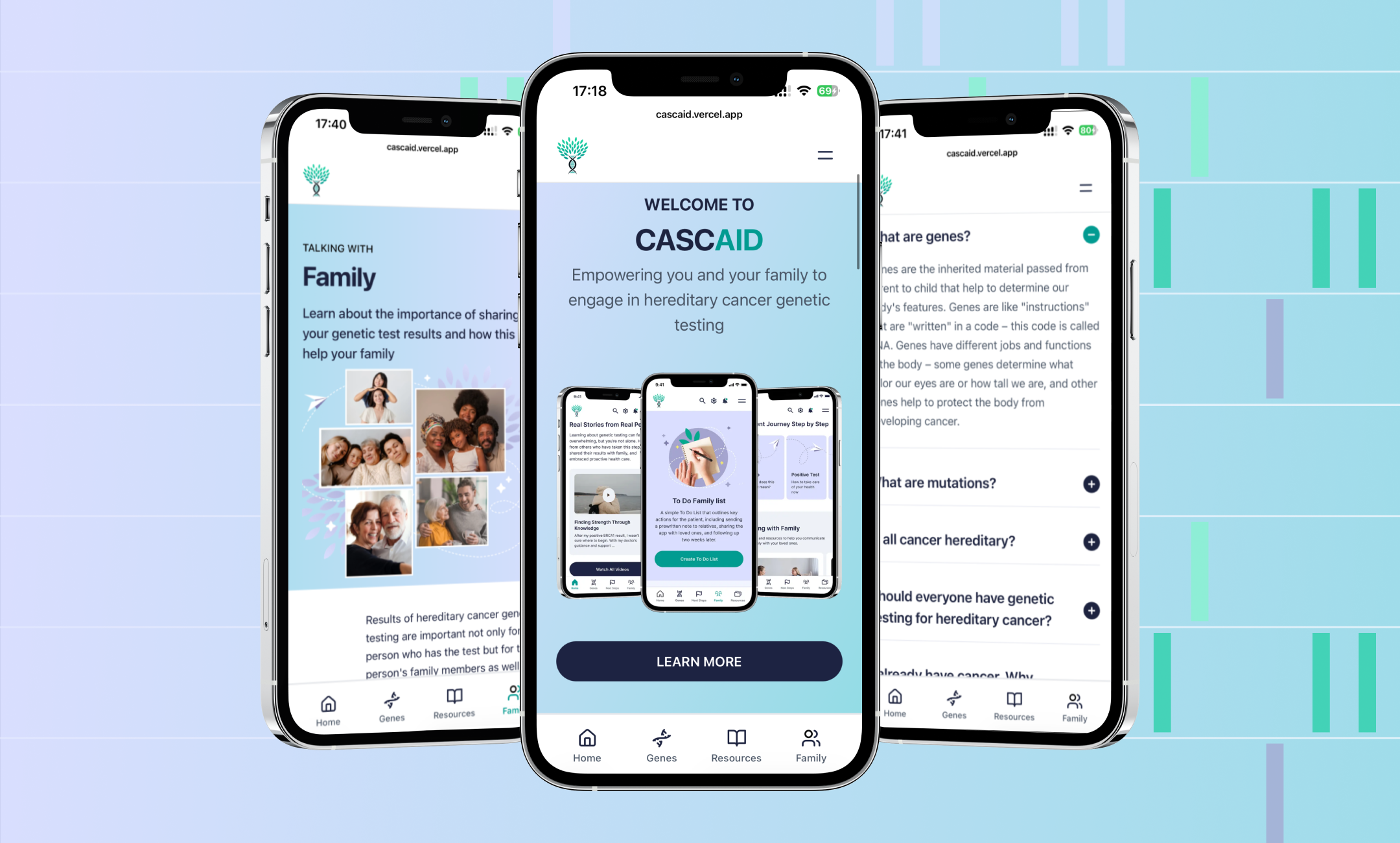
We created a browser-based web application that uses lightweight onboarding and intelligent branching to personalize the user experience. Whether someone tested positive or is a relative wanting to learn more, the tool adapts instantly and anonymously. Key Features:
- Lightweight onboarding: 3 quick questions determine user type and path
- Role-based flows: Different interfaces for tested patients vs. at-risk relatives
- Next Steps guidance: Personalized action items like finding a PCP or genetic counselor
- Contextual popups: Seamless updates based on user history (e.g. “You just got tested”)
- Educational Hub: An “Understanding Genetic Testing” tab for deeper learning

THE
Results
- A first-of-its-kind user-state-driven experience that delivers personalized support without requiring login or registration.
- Clear, digestible pathways for different emotional and informational needs, from medical action to family communication.
- Reduced confusion and increased confidence among users navigating hereditary cancer risk and testing decisions.
- A scalable tool that can be used nationally to improve outcomes for patients and their families through education, accessibility, and support.
The Audience
This tool was designed for two primary audiences:

Tom
Patient with Positive Result
- Recently received a BRCA2 mutation diagnosis
- Overwhelmed and anxious
- Unsure how to communicate results with family
- Needs trusted next steps and emotional support

Emily
At-Risk Relative
- Heard about a mutation in her family
- Doesn’t know if she should get tested
- Nervous, curious, and looking for clarity
- Needs guidance without pressure
Our design had to meet both users where they are — emotionally and informationally.
User Flows
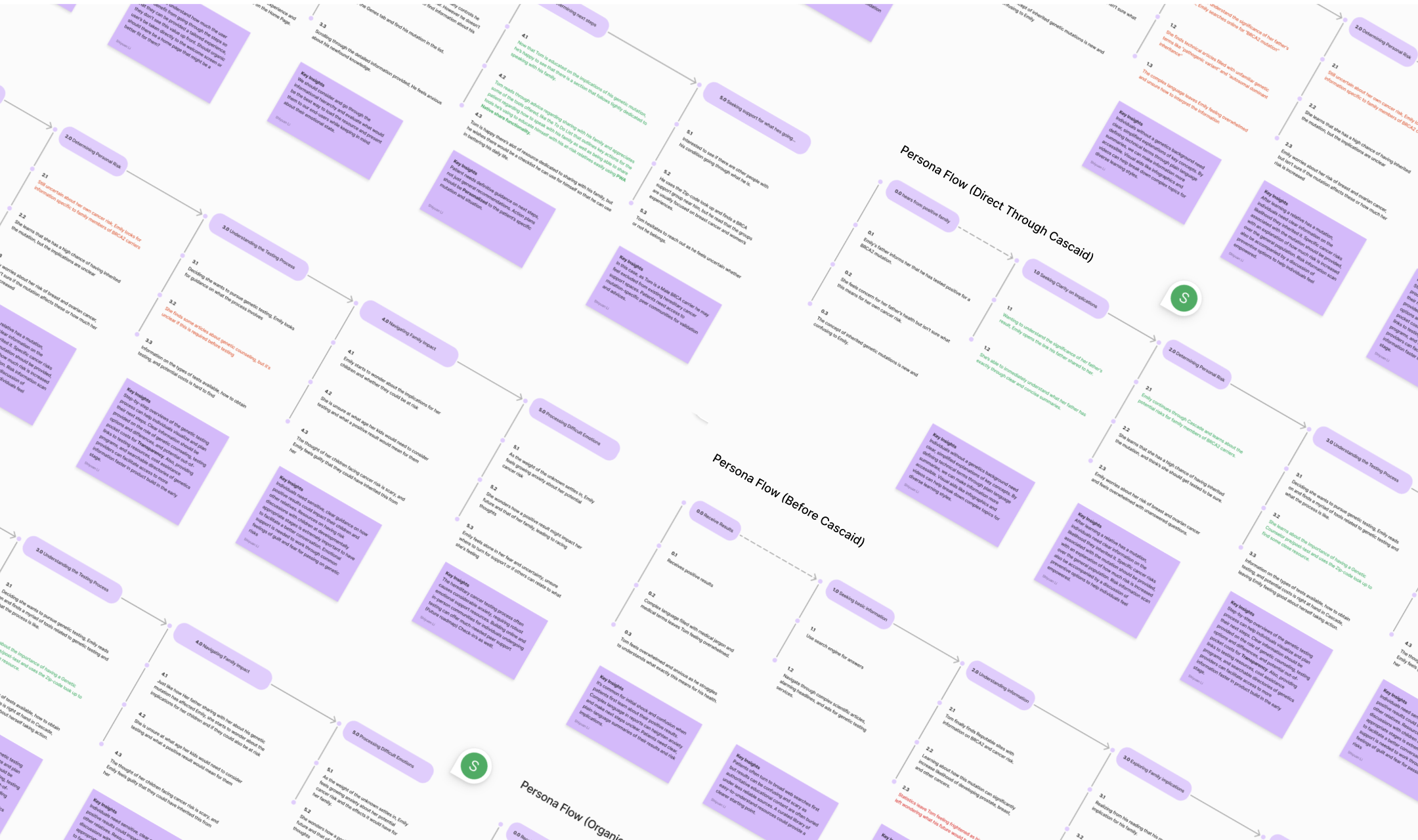
We created detailed user flows to reflect two distinct but equally important journeys: Tom, a patient navigating his own genetic results, and Emily, a family member trying to understand inherited risk. These maps helped us uncover emotional pain points, surface clarity gaps, and design a tool that guides both types of users from confusion to clarity.
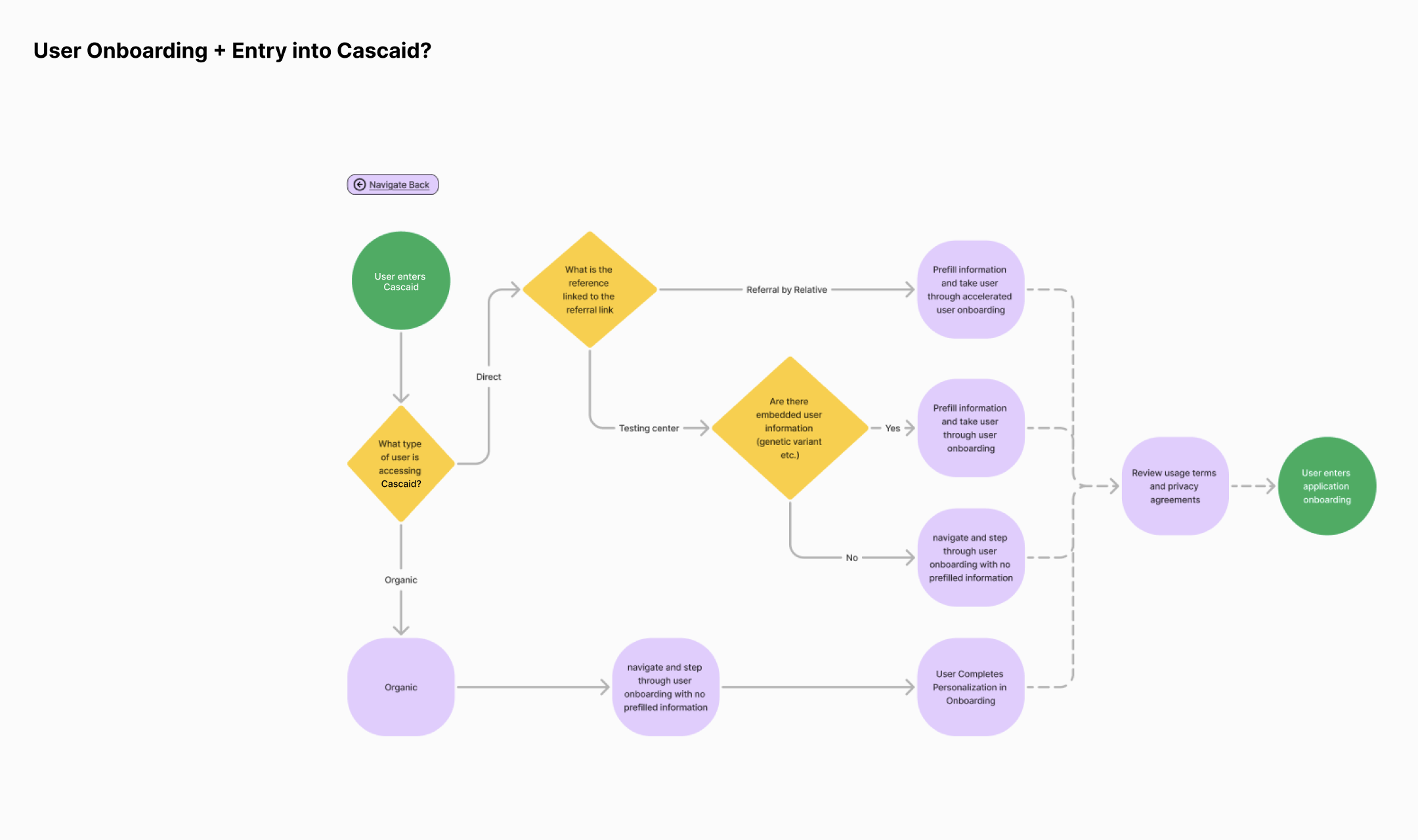
Application Flow
The app uses a lightweight onboarding screen to identify the user type and state, then delivers tailored content through a consistent navigation system. Smart popups adjust the experience when users return, ensuring continuity and relevance.
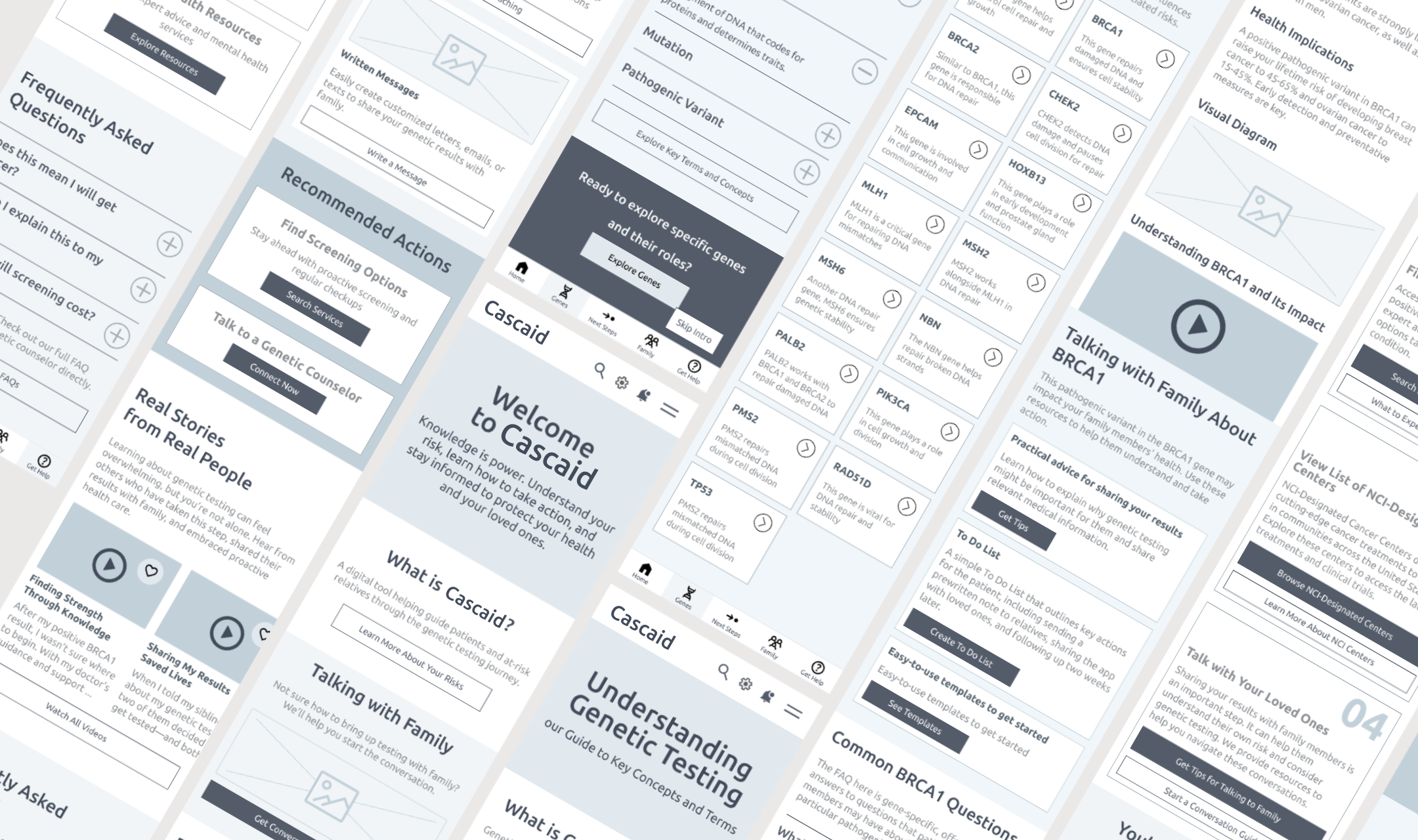
Wireframes
Based on the user flows, we constructed high fidelity wireframes to lessen the difficulty of accessing relevant information immediately.
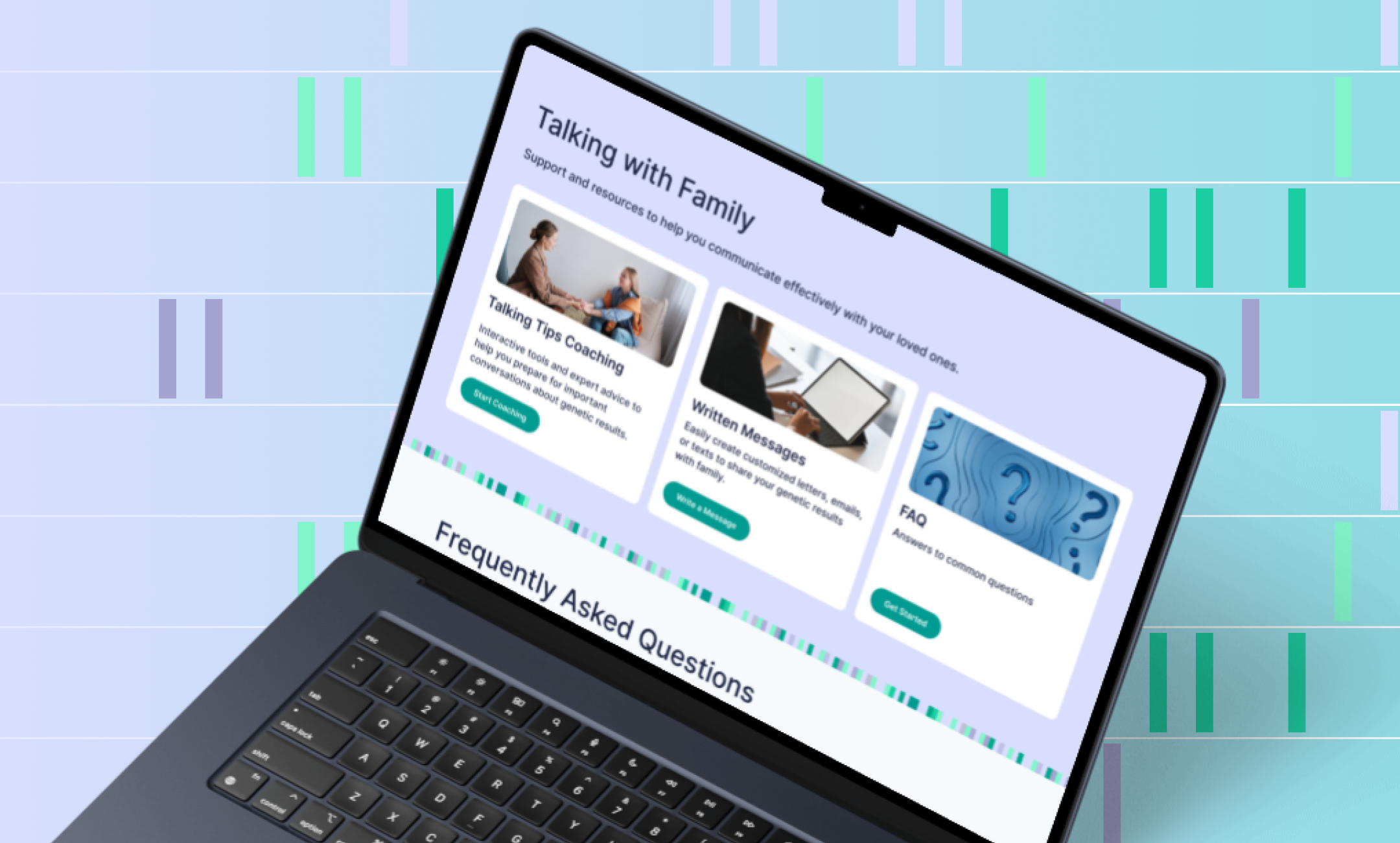
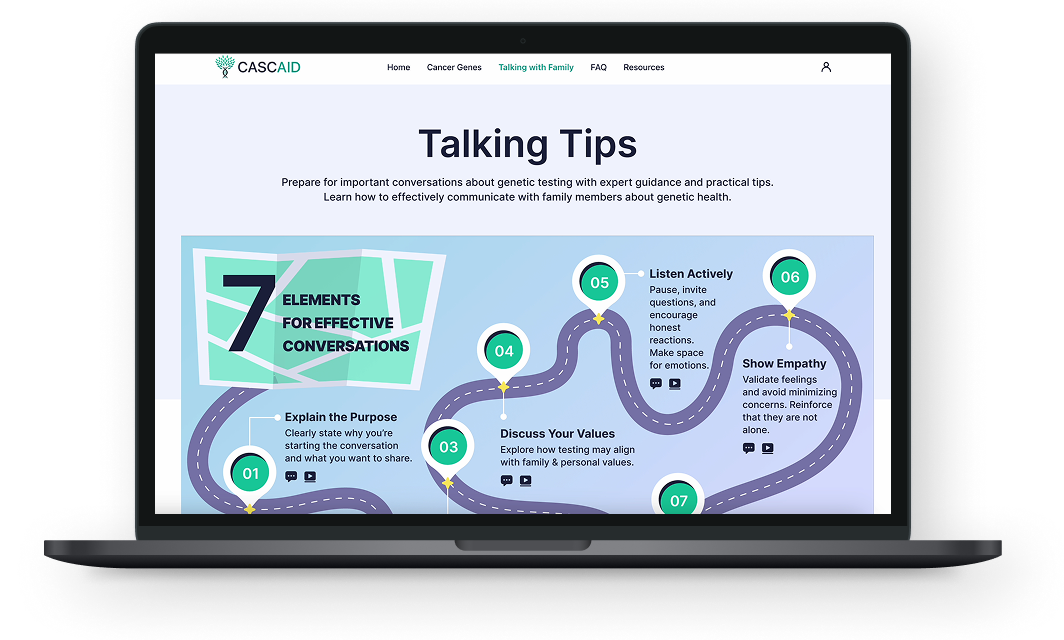
Interactive Guidance for Family Conversations
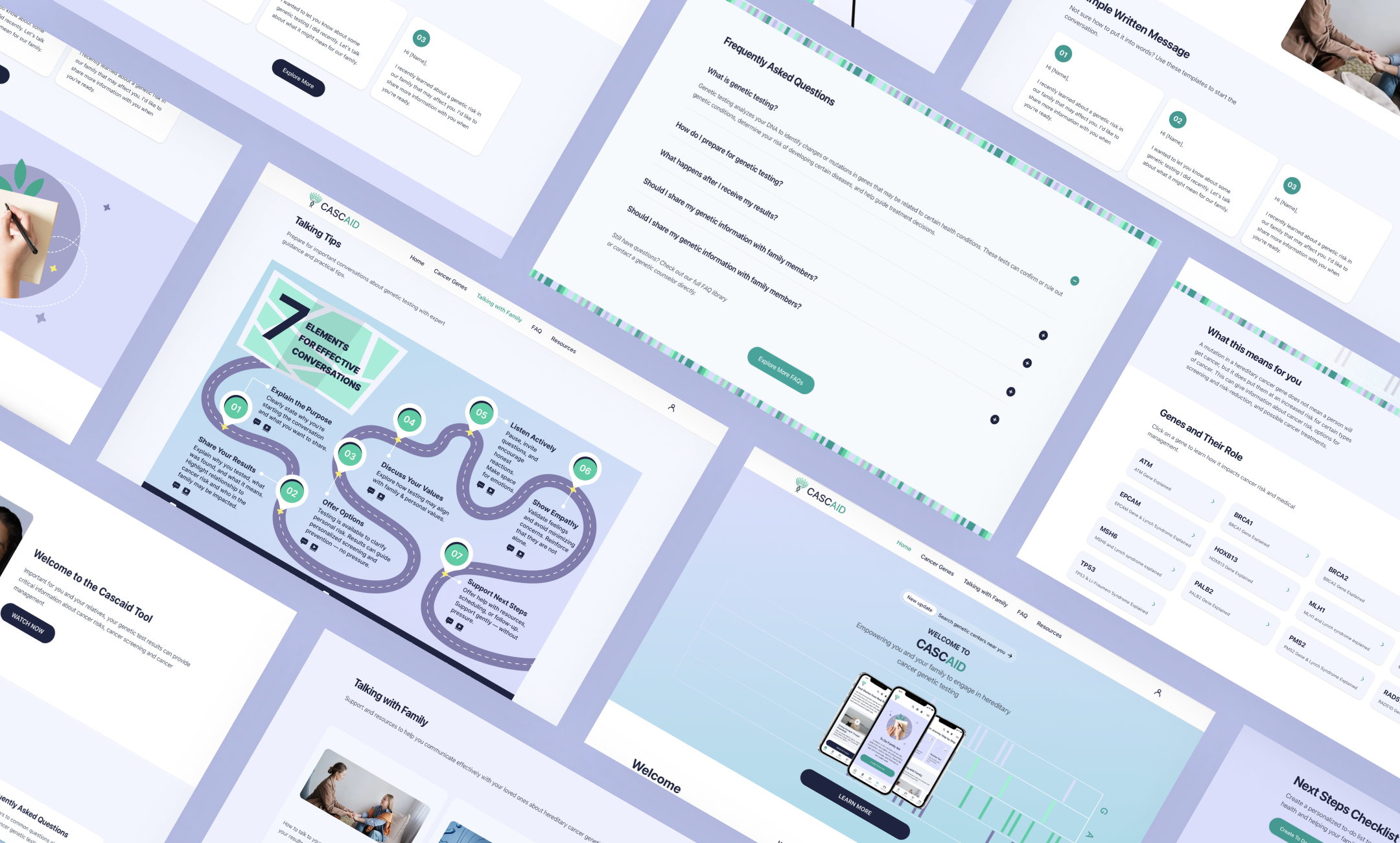
We converted static talking tips into a structured 7-step interactive experience, “7 Elements for Effective Conversations.”
Each step allows users to open example phrases or access expert video guidance directly within the page. The visual path acts as both summary and navigation, helping users move from information to confident, structured communication.
The Logo Design

Goal
Create a distinctive, symbolic logo reflecting genetic heritage, family roots, and personal identity—while staying flexible for potential brand names (GENELOGUE, myGeneration, Cascade).

Challenge
Since the brand name was still under discussion, we prioritized a visual identity that could stand alone, not relying on typography alone to communicate meaning.

Approach
We explored diverse visual metaphors—DNA, trees, human figures—to express identity, heritage, and growth. The goal was to create a symbol strong enough to stand alone, regardless of the final brand name.
Concept Exploration
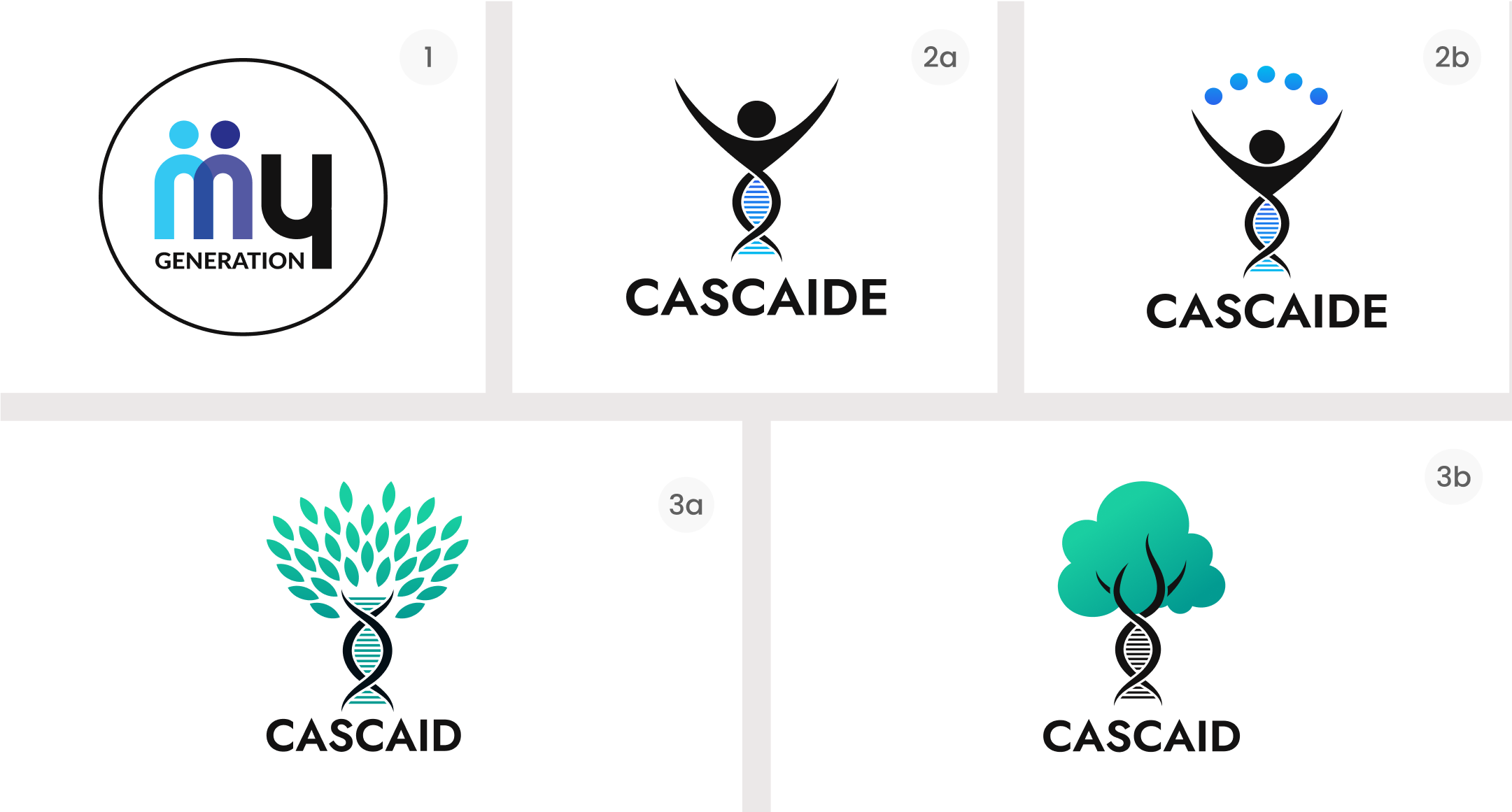
We explored five concepts (Logos 1–3B), each integrating human, genetic, and growth symbolism.
- Logo 1 played on the word “my” to emphasize personalization.
- Logos 2A/2B merged a human figure with a DNA strand and radiating circles—highlighting impact and continuity.
- Logos 3A/3B combined the Tree of Life with DNA, representing the core idea of generational growth and biological legacy.
Selected Concept
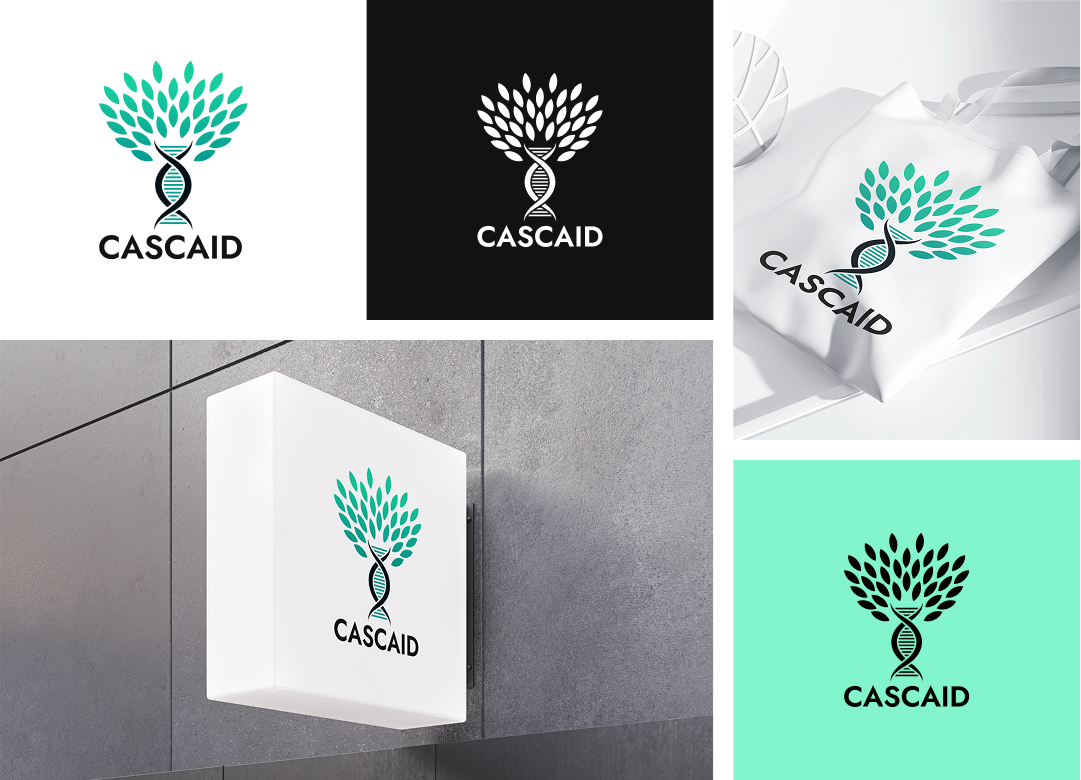
Logo 3A was chosen for its rich symbolism and timeless structure:
- A DNA helix forming the tree trunk symbolizes the genetic foundation of identity.
- The circular leaf layout reflects family unity, natural growth, and knowledge passed down over time.
The design works beautifully across brand names—and feels both scientific and human-centered.
The Experience